Project Conditions & Risks
Textured HDPE geomembranes, protective geotextiles and GCL are selected for interface friction, chemical exposure, settlement and construction traffic. Slope design checks interface shear, anchorage and drainage paths.
Site challenge
Large slopes, aggressive fluids and construction traffic act together; compliant sheet strength alone does not demonstrate interface stability.
Failure risk
Ignoring interface shear, chemical compatibility or settlement can lead to sliding, stress cracking or solution migration.
Acceptance focus
Confirm resin compatibility, verify project-specific interface parameters and trace rolls, seams, repairs and solution-drainage components.
System Components & Material Functions
Compatibility-verified barrier
Evaluate HDPE against the actual fluid composition, concentration, maximum temperature, head and contact period for tailings or heap-leach service.
Protection and composite barrier
Geotextile reduces puncture damage. Use GCL only where ionic environment, hydration conditions and the approved design are compatible.
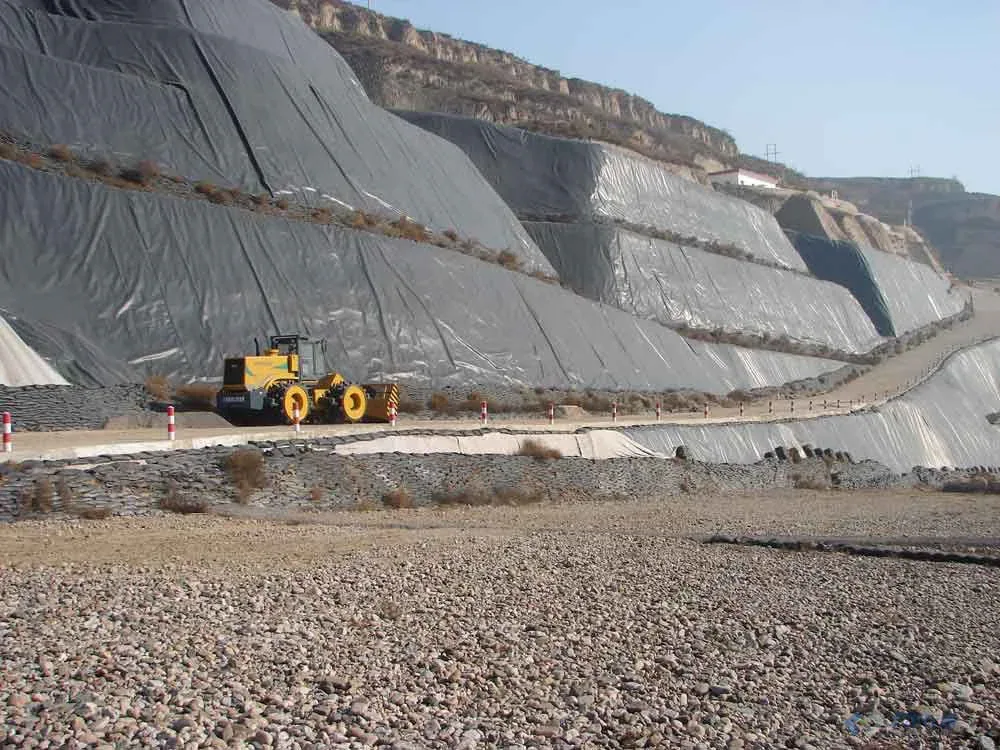
Slope interface
Select textured liner from project-specific liner/soil and liner/geotextile shear data, together with anchorage, drainage and settlement requirements.
Installation & Quality Control
- 01
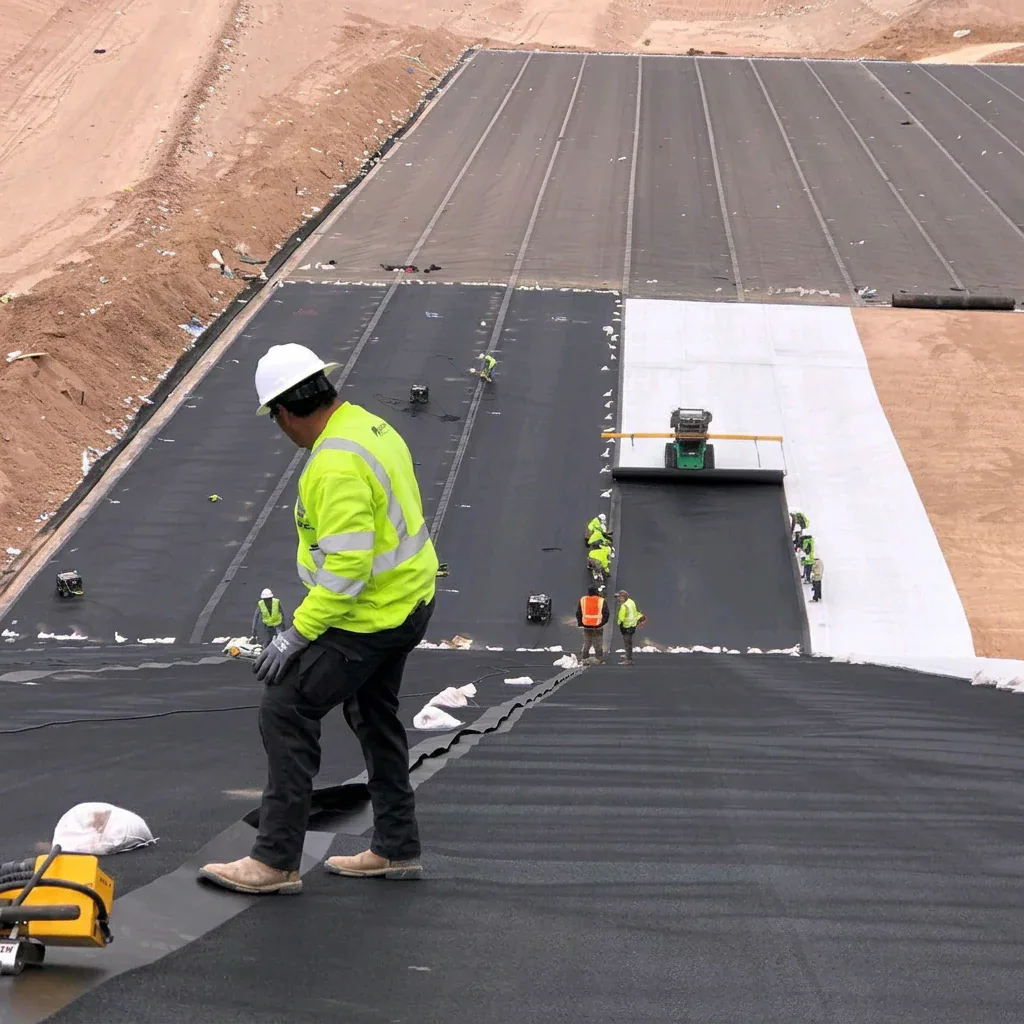
Approve subgrade, drainage, panel layout and anchor trenches before deployment; restrict traffic and sharp equipment on accepted liner areas.
- 02
Qualify welding parameters on production materials and record ambient conditions, seams, repairs and destructive samples under the CQA plan.
- 03
Place cover or drainage materials in controlled lifts without dragging, folding or concentrating loads on the liner.
Recommended Equipment & Process Control
Dual-track hot-wedge welder, extrusion welder, hot-air gun, vacuum box, pressure gauge, thickness gauge and spark tester where specified.
Location-Based Selection & Acceptance
This page supports preliminary material comparison, technical communication and quotation preparation. It does not replace project design, stability or hydraulic calculations, applicable laws or local regulations. Final specifications, layer sequence, details, accessories and supply scope are governed by approved drawings, project specifications and the confirmed order.
Quotation and supply confirmation must also define the applicable standard and edition, roll dimensions and tolerances, lot testing and roll traceability, third-party verification, packing/container loading, phased delivery and warranty boundaries.
Supply boundary
Factory supply covers only the products, accessories, documents and services expressly listed in the confirmed order. Civil works, design calculations, drainage, anchorage and third-party system components remain with the responsible project parties unless separately agreed.
Standards & document control
Manufacturing reference specifications establish baseline product or MQC requirements; they do not replace the project specification. Confirm the governing edition, test methods, acceptance values, CQA plan and local regulatory requirements before award.
| Location / function | Candidate material | Selection basis | Installation & acceptance focus |
|---|---|---|---|
| Base and gentle areas | Smooth HDPE geomembrane | Fluid, head and subgrade conditions | Compatibility, seams and puncture protection |
| Sloped containment | Single- or double-textured HDPE | Project-specific interface shear testing | Anchorage, toes and stability |
| Composite barrier | GCL (by approved design) | Hydration, ionic environment and compatibility | Overlap and protection from premature hydration |
| Protection layers | Filament geotextile | Cover aggregate and construction loading | Puncture, wrinkling and placement damage |
Base and gentle areas
- Candidate material
- Smooth HDPE geomembrane
- Selection basis
- Fluid, head and subgrade conditions
- Installation & acceptance focus
- Compatibility, seams and puncture protection
Sloped containment
- Candidate material
- Single- or double-textured HDPE
- Selection basis
- Project-specific interface shear testing
- Installation & acceptance focus
- Anchorage, toes and stability
Composite barrier
- Candidate material
- GCL (by approved design)
- Selection basis
- Hydration, ionic environment and compatibility
- Installation & acceptance focus
- Overlap and protection from premature hydration
Protection layers
- Candidate material
- Filament geotextile
- Selection basis
- Cover aggregate and construction loading
- Installation & acceptance focus
- Puncture, wrinkling and placement damage
Preliminary Product Configuration
Core materials
Supporting materials
Conditional materials
Typical construction scenarios
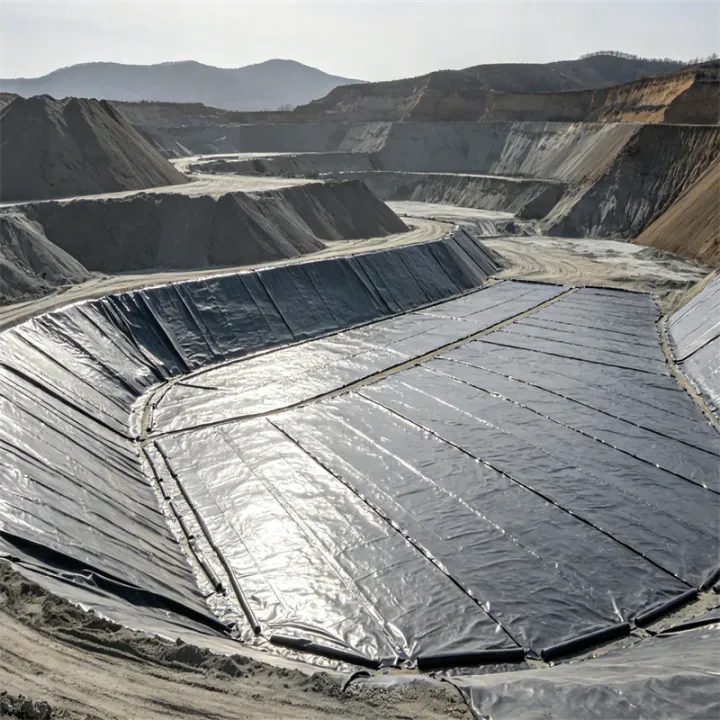
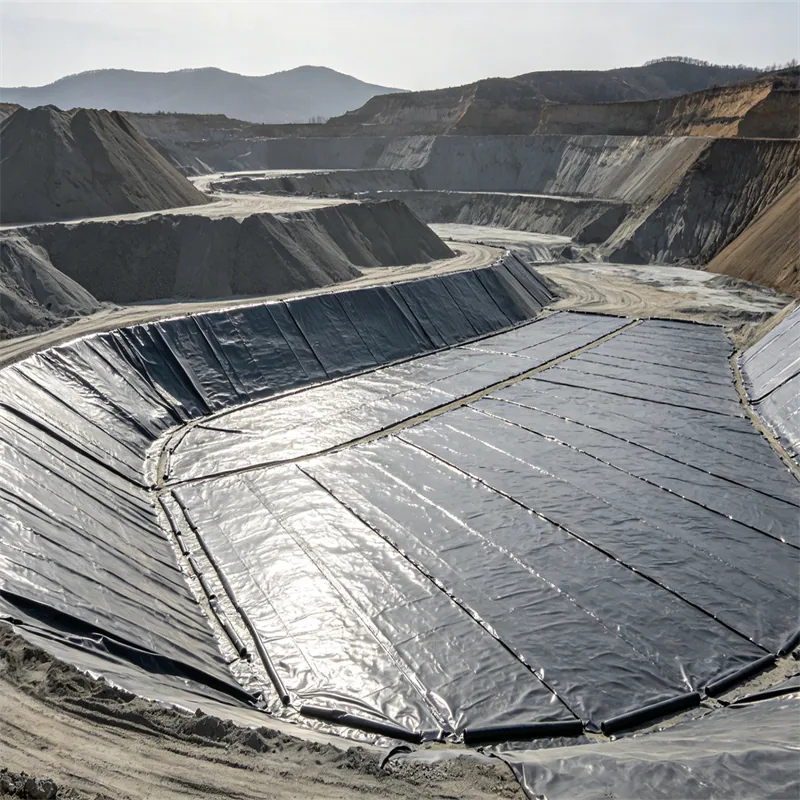
Tailings containment system
Shows the system relationship among base, slopes, drainage and anchors; it does not replace project stability or compatibility assessment.
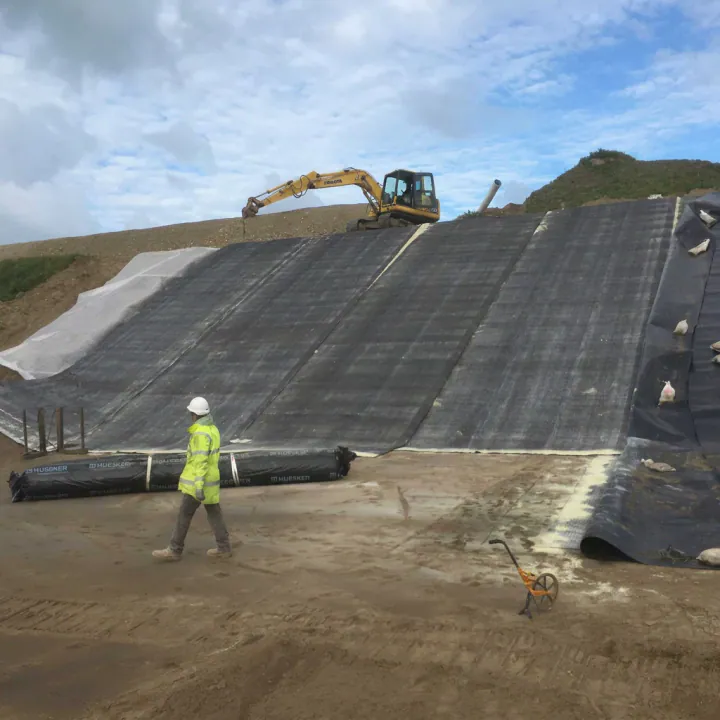
Heap-leach pad or mine cover
Define liner, protection and interfaces from chemical exposure, stresses, drainage and long-term exposure.
Prepare these project parameters
- Facility type: tailings, heap leach or mine cover
- Complete fluid composition, concentration, pH, maximum temperature, head and contact period
- Plan, slopes and project-specific interface shear requirements
- Subgrade, cover, traffic and expected settlement
- Applicable standards, CQA/third-party requirements, quantity and delivery programme