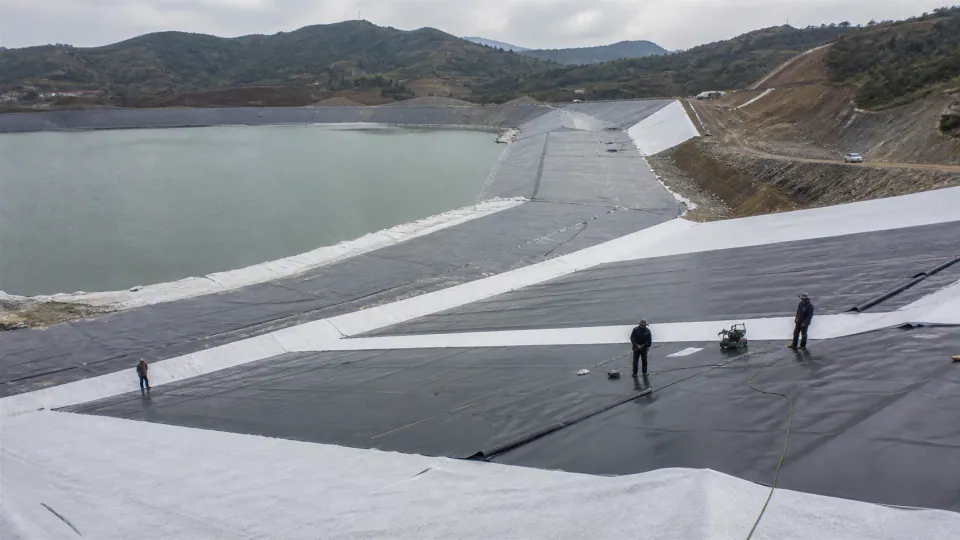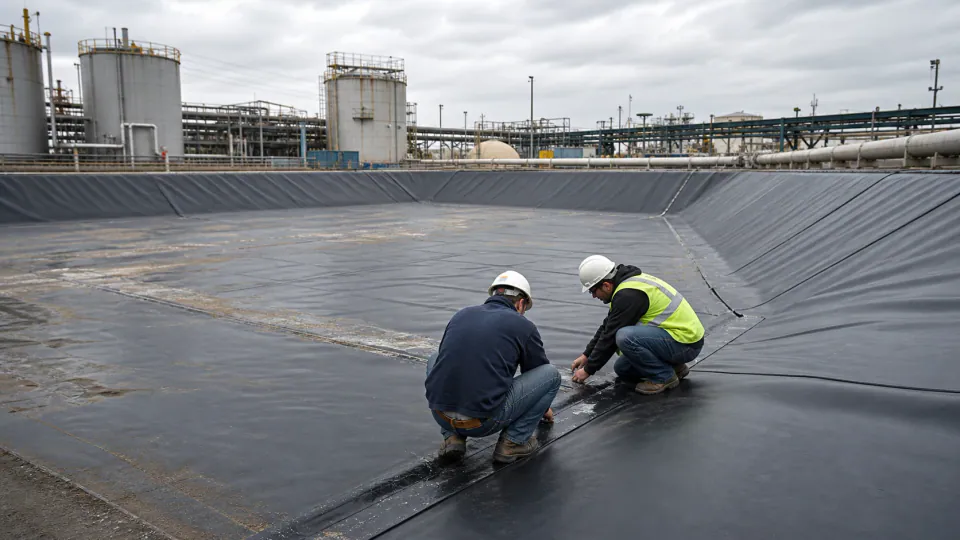
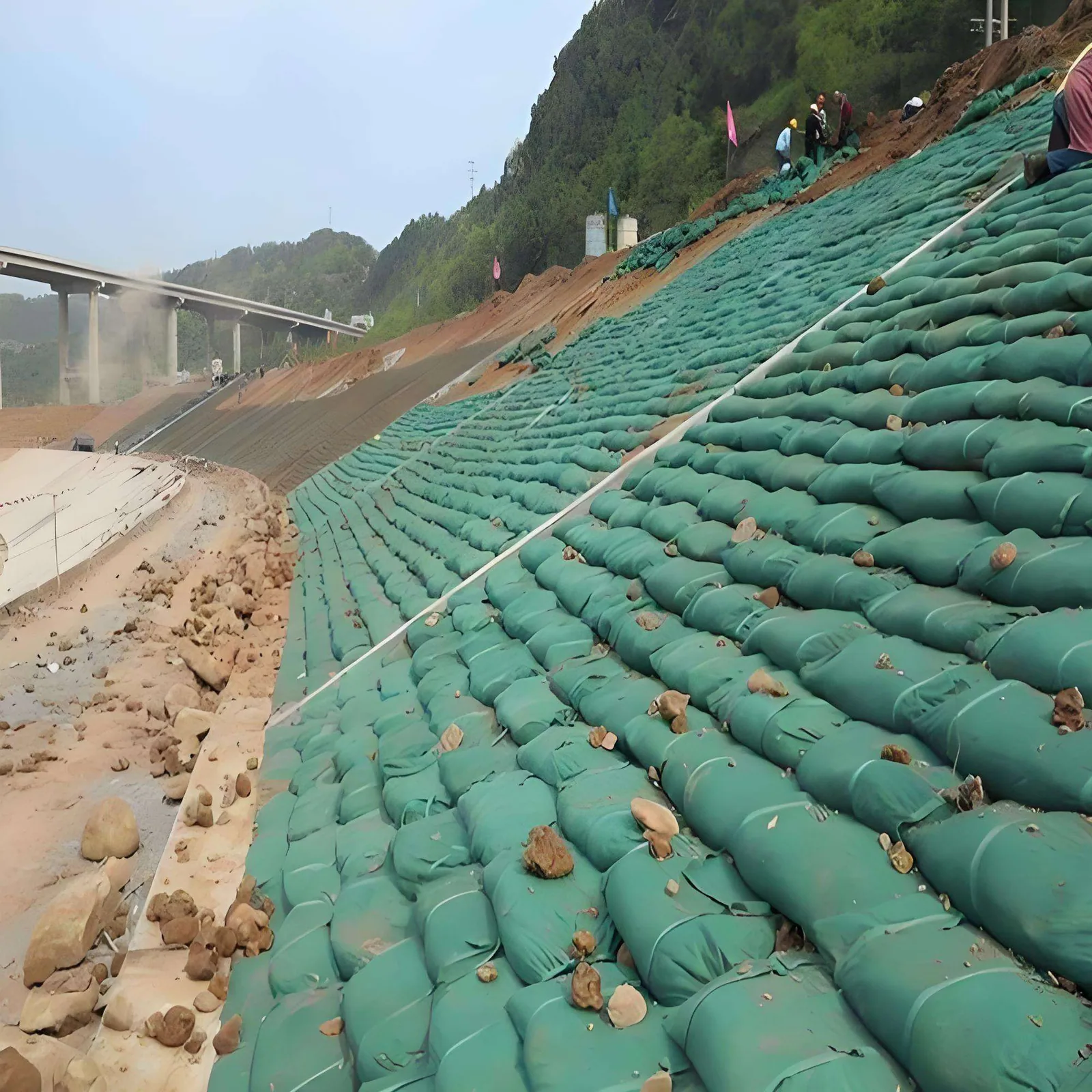
Project Conditions & Risks
Filament geotextiles, geobags, geocells and cement blankets are selected from flow velocity, water-level variation, soil grading and bank stability. Filter layers must retain soil while allowing drainage.
Site challenge
Water-level cycling, velocity and fine-soil migration can weaken both bank toe and slope; surface covering alone cannot provide long-term stability.
Failure risk
Incompatible filter openings, an unrestrained toe or blocked outlets can cause piping, uplift and local collapse.
Acceptance focus
Verify soil grading, filter continuity, toe foundation, anchorage, drainage outlets and vegetation-establishment conditions.
System Components & Material Functions
Filtration and separation
Geotextile must retain the site soil while permitting drainage. Check opening size, permeability and clogging resistance rather than selecting by mass alone.
Surface erosion control
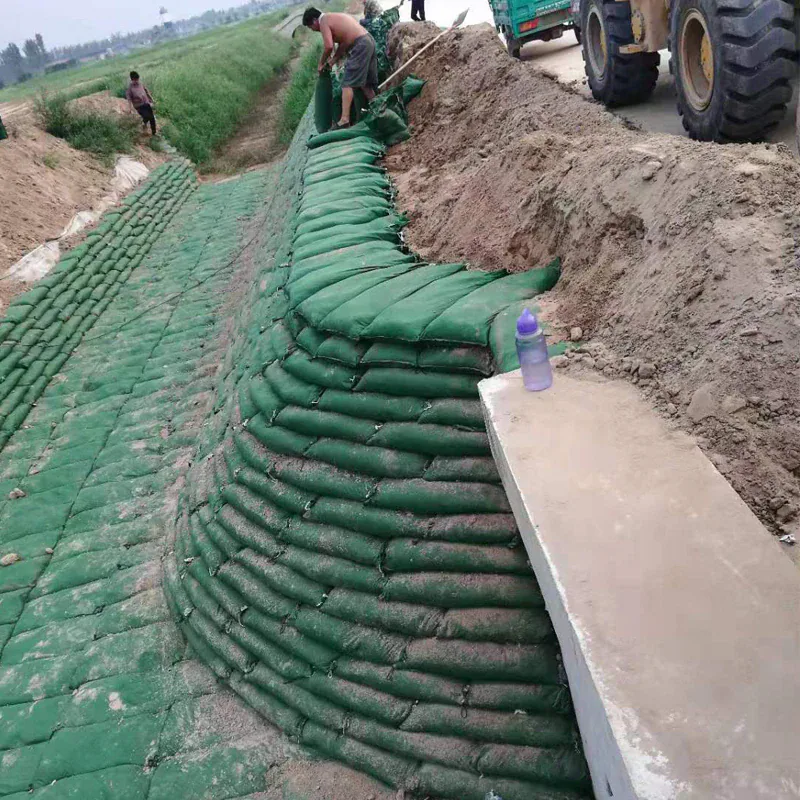
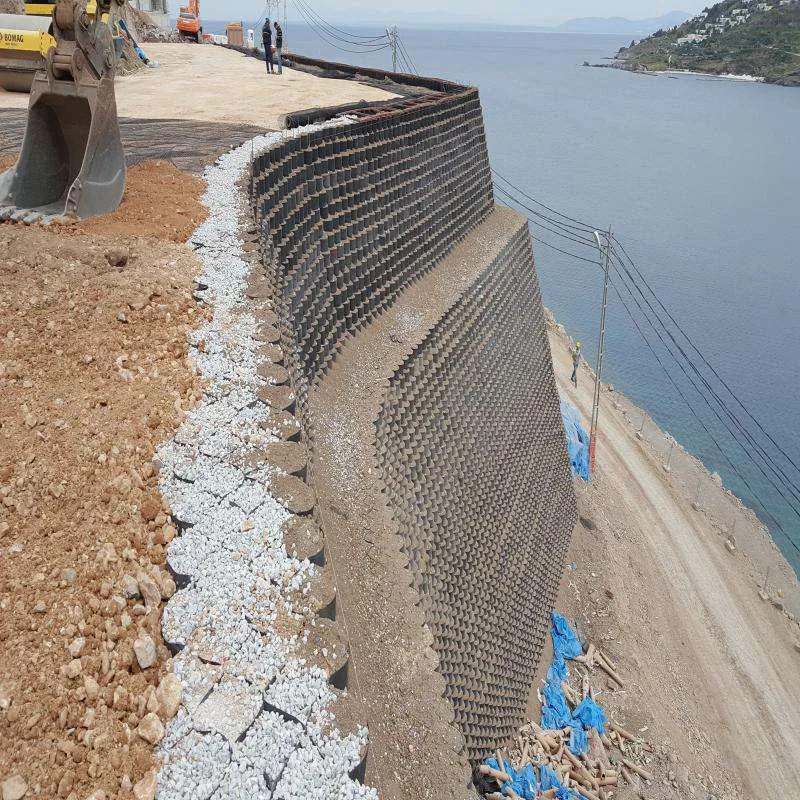
Geobags or geocells provide surface confinement and are selected from design velocity, scour depth, slope and water-level variation.
Toe and drainage system
Toe foundation, anchorage and outlets act together; material selection does not replace hydraulic, flood or slope-stability calculations.
Installation & Quality Control
- 01
Investigate velocity, level variation, soil grading and toe stability; remove loose material and provide temporary flow diversion.
- 02
Place the filter continuously and control overlaps/anchors; install geobags, geocells or ecological protection to the approved design.
- 03
Accept toes and outlets by area; backfill and vegetation work must not damage filter continuity.
Recommended Equipment & Process Control
Survey equipment, cutting and sewing tools, U-pins/anchors, light spreading equipment, compaction tools and hydraulic-detail sealing tools.
Location-Based Selection & Acceptance
This page supports preliminary material comparison, technical communication and quotation preparation. It does not replace project design, stability or hydraulic calculations, applicable laws or local regulations. Final specifications, layer sequence, details, accessories and supply scope are governed by approved drawings, project specifications and the confirmed order.
Quotation and supply confirmation must also define the applicable standard and edition, roll dimensions and tolerances, lot testing and roll traceability, third-party verification, packing/container loading, phased delivery and warranty boundaries.
Supply boundary
Factory supply covers only the products, accessories, documents and services expressly listed in the confirmed order. Civil works, design calculations, drainage, anchorage and third-party system components remain with the responsible project parties unless separately agreed.
Standards & document control
Manufacturing reference specifications establish baseline product or MQC requirements; they do not replace the project specification. Confirm the governing edition, test methods, acceptance values, CQA plan and local regulatory requirements before award.
| Location / function | Candidate material | Selection basis | Installation & acceptance focus |
|---|---|---|---|
| Slope filter layer | Filament/staple-fiber geotextile | Soil grading, opening size and permeability | Overlap, clogging and soil retention |
| Ecological erosion protection | Geobags | Velocity, water level and vegetation target | Staggering, connections, fill and vegetation |
| Three-dimensional slope confinement | HDPE geocell | Slope, fill and erosion demand | Anchorage, expansion and filling |
| Local channel protection | Cement blanket (by design) | Flow, substrate and curing | Surface erosion protection, not a seepage barrier |
| Defined seepage-control zone | Composite geomembrane (by design) | Only where a canal or artificial channel requires water retention | Coordinate with drainage/ecology and detail anchors and interfaces |
Slope filter layer
- Candidate material
- Filament/staple-fiber geotextile
- Selection basis
- Soil grading, opening size and permeability
- Installation & acceptance focus
- Overlap, clogging and soil retention
Ecological erosion protection
- Candidate material
- Geobags
- Selection basis
- Velocity, water level and vegetation target
- Installation & acceptance focus
- Staggering, connections, fill and vegetation
Three-dimensional slope confinement
- Candidate material
- HDPE geocell
- Selection basis
- Slope, fill and erosion demand
- Installation & acceptance focus
- Anchorage, expansion and filling
Local channel protection
- Candidate material
- Cement blanket (by design)
- Selection basis
- Flow, substrate and curing
- Installation & acceptance focus
- Surface erosion protection, not a seepage barrier
Defined seepage-control zone
- Candidate material
- Composite geomembrane (by design)
- Selection basis
- Only where a canal or artificial channel requires water retention
- Installation & acceptance focus
- Coordinate with drainage/ecology and detail anchors and interfaces
Preliminary Product Configuration
Core materials
Conditional materials
Typical construction scenarios
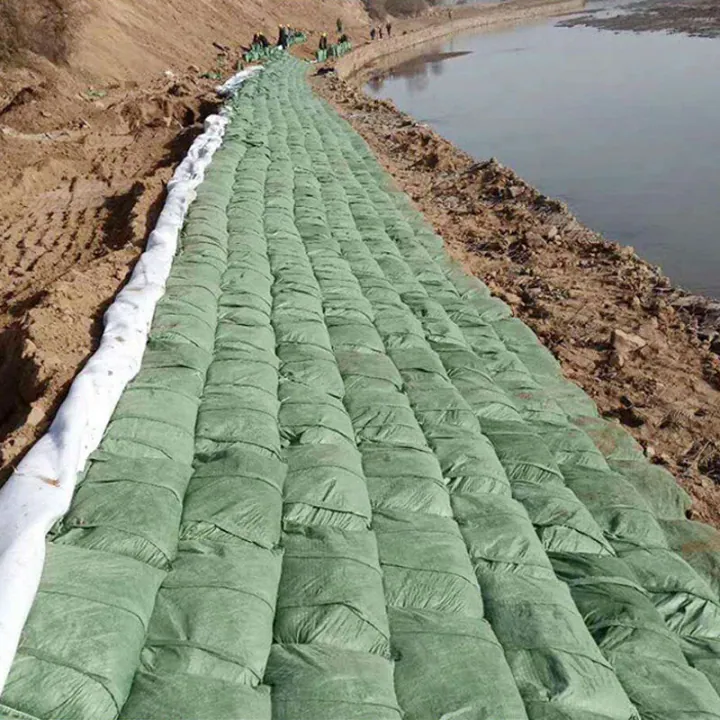
Ecological riverbank protection
Combines filtration, surface confinement and vegetation while maintaining drainage and erosion resistance.
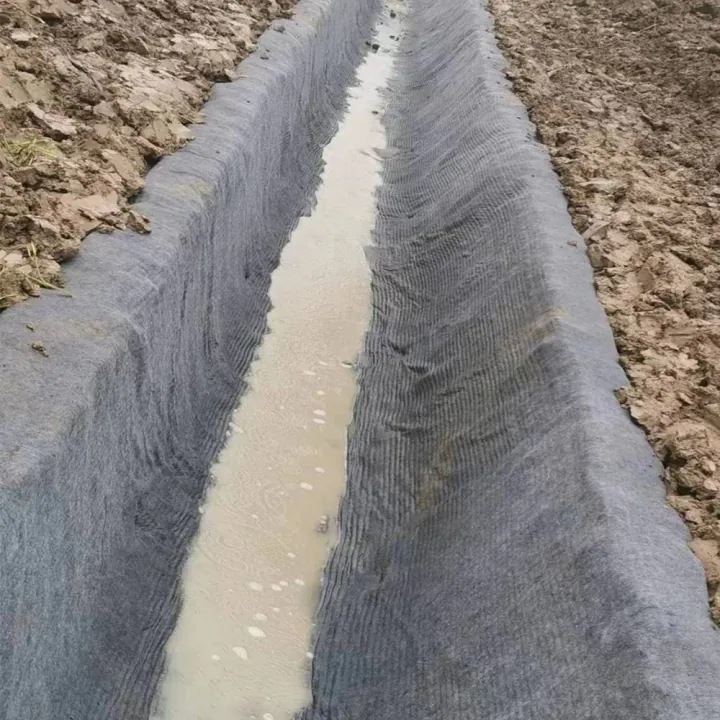
Channel and toe rehabilitation
Correct scour and outlet conditions before adding surface protection so the underlying failure mechanism is addressed.
Prepare these project parameters
- Channel section, slope, design velocity, water-level variation and scour depth
- Bank soil grading, groundwater, toe stability and outlets
- Primary objective: flood control, filtration, protection, restoration or defined seepage control
- Approved hydraulic/stability design, layer positions and acceptance criteria
- Material areas, installation window, delivery date and location