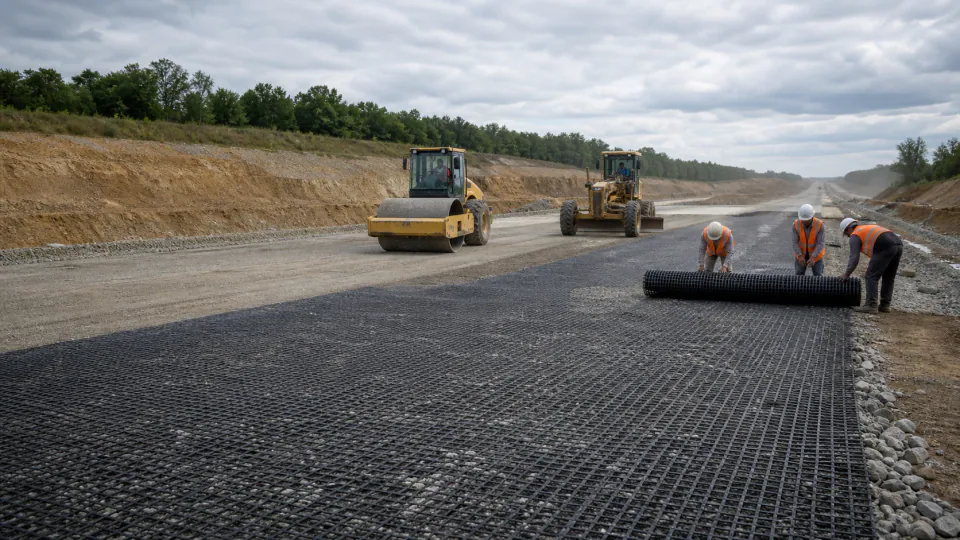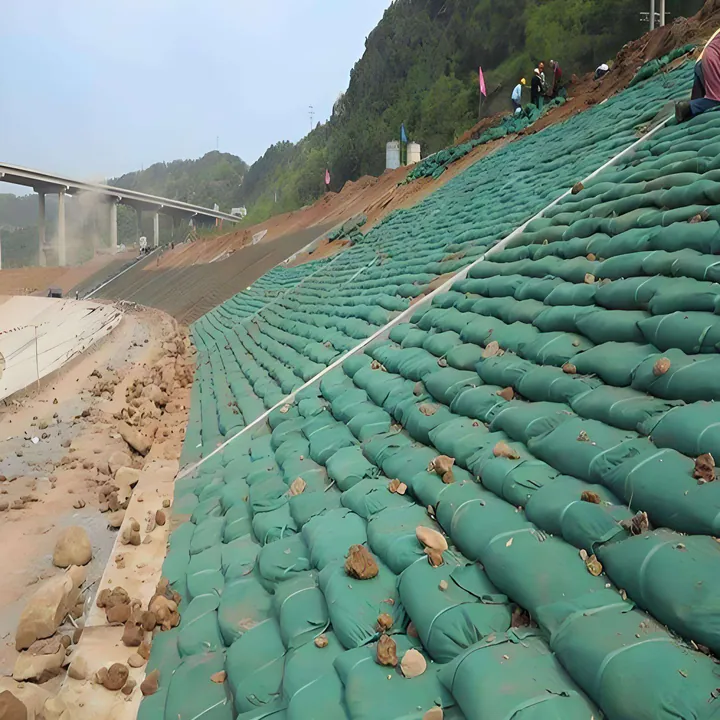
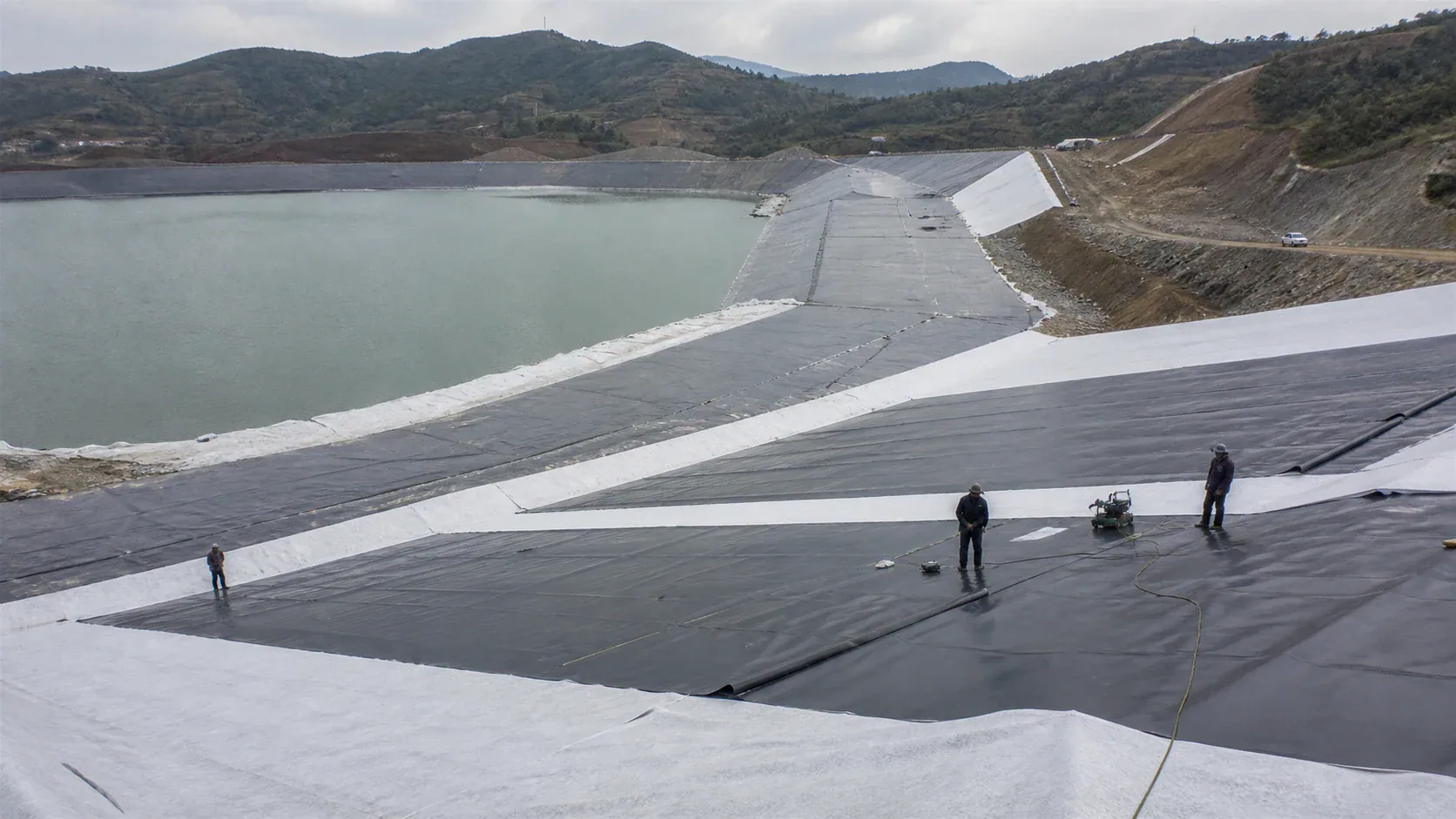
Project Conditions & Risks
HDPE or composite geomembranes, protective geotextiles, GCL or cement blankets are combined according to head pressure, settlement, wave erosion, subgrade particles and maintenance access.
Site challenge
Large-area deployment, water-level cycling and bank deformation demand durable continuity, anchorage and protection.
Failure risk
Unrelieved groundwater, inadequate anchorage or discontinuous structure interfaces can cause uplift, sliding or bypass seepage.
Acceptance focus
Verify subgrade, water conditions and drainage, then inspect seams, anchors, movement details and pipe penetrations by area.
System Components & Material Functions
Primary barrier
Select the geomembrane from head, subgrade, settlement, exposure and maintenance conditions; do not infer suitability from thickness alone.
Protection and filtration
Geotextile protects the barrier, while a separate filter design may be required. Protection and filtration functions must not be treated as interchangeable.
Conditional surface systems
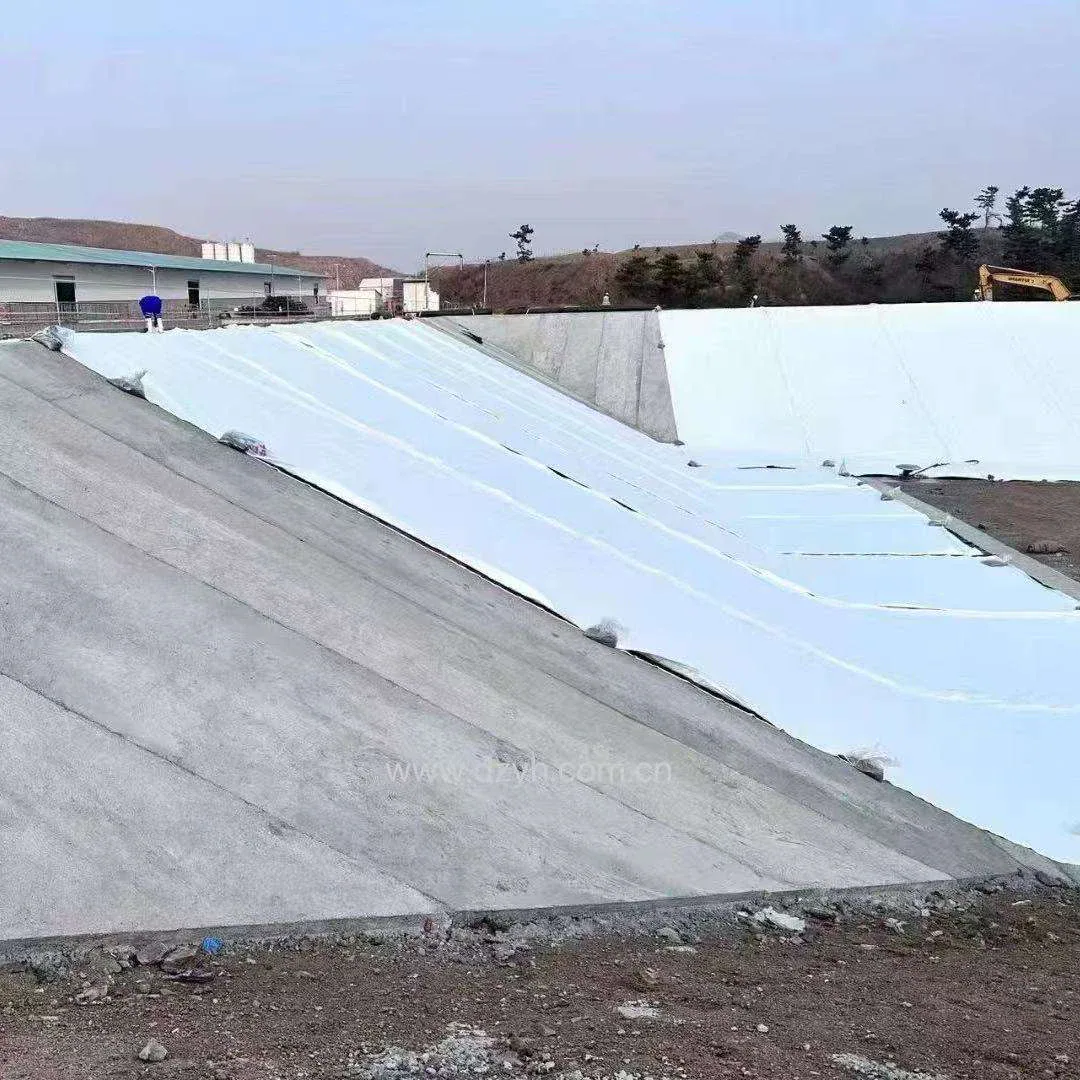
GCL requires compatible hydration and confinement. Cement blanket provides surface erosion protection and does not replace the primary seepage barrier.
Installation & Quality Control
- 01
Accept subgrade, groundwater relief and structure interfaces before panel deployment.
- 02
Deploy to the approved layout, qualify welds and control wrinkles, thermal movement and anchorage at changing water levels.
- 03
Test seams and repairs, then place protection without dragging or concentrated loading; separately accept pipes, joints and hydraulic structures.
Recommended Equipment & Process Control
Survey equipment, cutting and sewing tools, U-pins/anchors, light spreading equipment, compaction tools and hydraulic-detail sealing tools.
Location-Based Selection & Acceptance
This page supports preliminary material comparison, technical communication and quotation preparation. It does not replace project design, stability or hydraulic calculations, applicable laws or local regulations. Final specifications, layer sequence, details, accessories and supply scope are governed by approved drawings, project specifications and the confirmed order.
Quotation and supply confirmation must also define the applicable standard and edition, roll dimensions and tolerances, lot testing and roll traceability, third-party verification, packing/container loading, phased delivery and warranty boundaries.
Supply boundary
Factory supply covers only the products, accessories, documents and services expressly listed in the confirmed order. Civil works, design calculations, drainage, anchorage and third-party system components remain with the responsible project parties unless separately agreed.
Standards & document control
Manufacturing reference specifications establish baseline product or MQC requirements; they do not replace the project specification. Confirm the governing edition, test methods, acceptance values, CQA plan and local regulatory requirements before award.
| Location / function | Candidate material | Selection basis | Installation & acceptance focus |
|---|---|---|---|
| Bottom and gentle slopes | Smooth HDPE geomembrane | Head, subgrade, exposure and maintenance | Seams, puncture and groundwater uplift |
| Compatible soil subgrade | Composite geomembrane (by design) | Subgrade, jointing and protection arrangement | Fabric/film integrity and interface details |
| Protection layer | Filament or staple-fiber geotextile | Particle size and construction loading | Puncture, overlap and installation damage |
| Composite low-permeability layer | GCL (by design) | Hydration, cover and water chemistry | No prolonged exposure or premature hydration |
| Canal-slope surface protection | Cement blanket (by design) | Flow, slope and curing conditions | Surface protection only; not the primary seepage liner |
Bottom and gentle slopes
- Candidate material
- Smooth HDPE geomembrane
- Selection basis
- Head, subgrade, exposure and maintenance
- Installation & acceptance focus
- Seams, puncture and groundwater uplift
Settlement/flexible transition
- Candidate material
- Selection basis
- Deformation and service environment
- Installation & acceptance focus
- Compatibility, welding and anchorage
Compatible soil subgrade
- Candidate material
- Composite geomembrane (by design)
- Selection basis
- Subgrade, jointing and protection arrangement
- Installation & acceptance focus
- Fabric/film integrity and interface details
Protection layer
- Candidate material
- Filament or staple-fiber geotextile
- Selection basis
- Particle size and construction loading
- Installation & acceptance focus
- Puncture, overlap and installation damage
Composite low-permeability layer
- Candidate material
- GCL (by design)
- Selection basis
- Hydration, cover and water chemistry
- Installation & acceptance focus
- No prolonged exposure or premature hydration
Canal-slope surface protection
- Candidate material
- Cement blanket (by design)
- Selection basis
- Flow, slope and curing conditions
- Installation & acceptance focus
- Surface protection only; not the primary seepage liner
Preliminary Product Configuration
Core materials
Supporting materials
Conditional materials
Typical construction scenarios
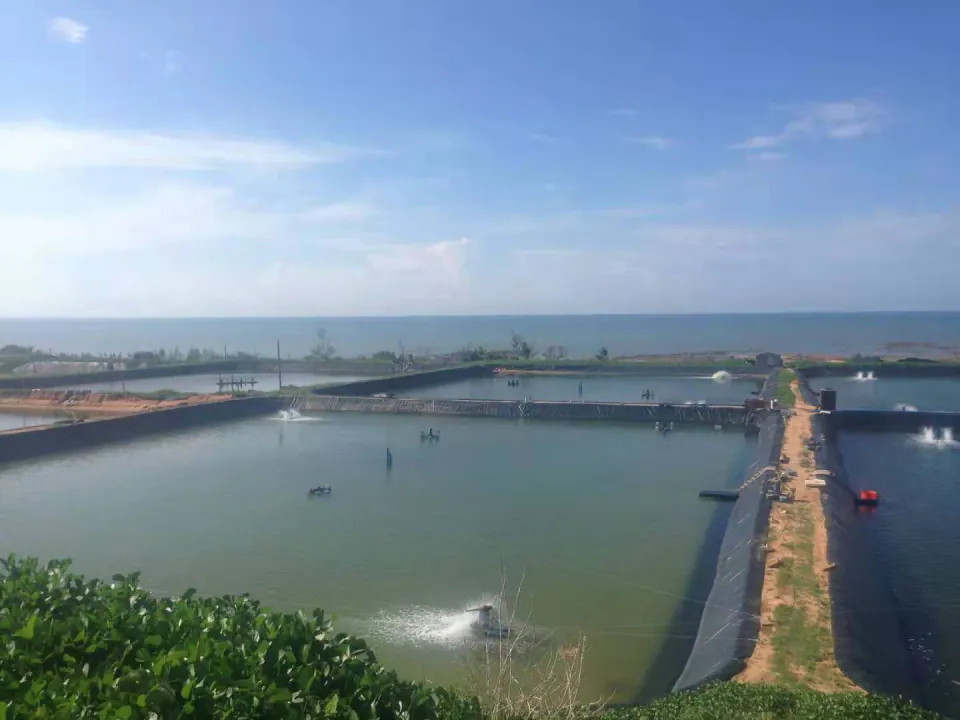
Reservoir or regulating-pond lining
Shows liner, slope anchors, groundwater relief and structure-interface coordination.
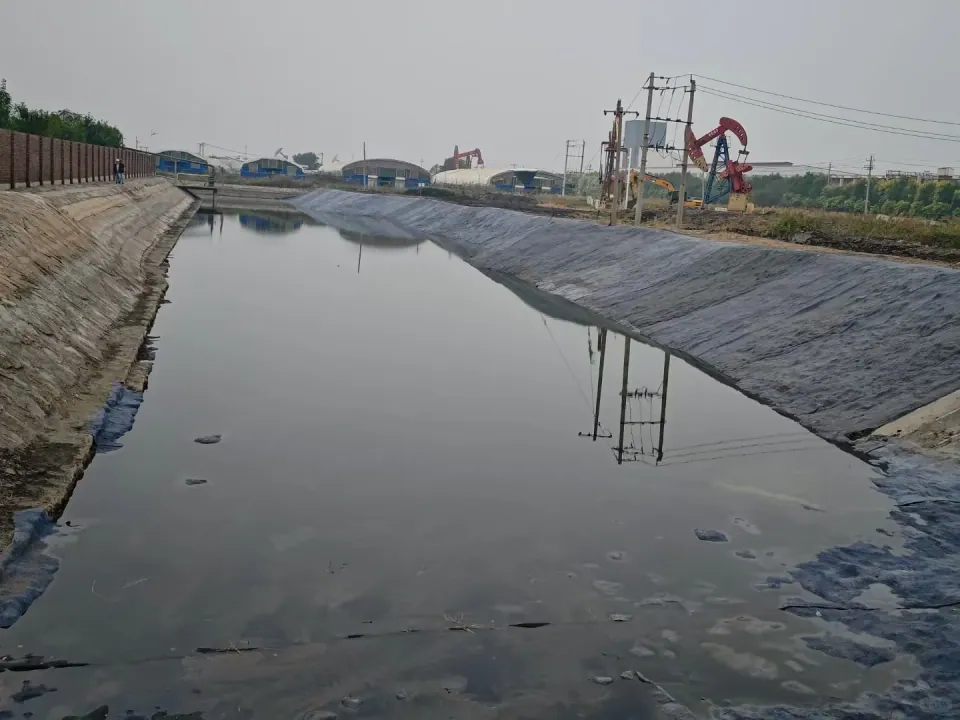
Canal lining and bank rehabilitation
Select flexible barrier and surface protection from flow, deformation and maintenance conditions.
Prepare these project parameters
- Water use, area, depth, normal and maximum level
- Bottom/slope soil, slope angle, groundwater and level variation
- Exposure period, waves or freeze-thaw conditions and maintenance method
- Concrete interfaces, pipe penetrations, mechanical anchorage and protection
- Applicable standard, supply boundary, quantities, location and delivery date