
Selection Guides
Procurement and acceptance checklist
| Site condition | Initial comparison | Required verification |
|---|---|---|
| Slope flatter than about 1V:5H, exposed sheet | Compare smooth HDPE | Wind, anchorage and maintenance access |
| About 1V:5H–1V:3H with cover | Compare smooth and single-textured options | Membrane/geotextile and membrane/soil shear |
| Steeper than about 1V:3H or a long covered slope | Evaluate single- or double-textured options | Stability, drainage and staged anchorage |
| Changing water levels or weak subgrade | Project-specific design | Pore pressures and overall stability |
Confirm the selection and acceptance criteria against the approved project design, relevant test evidence and contract.
Selection Guides
Project assessment
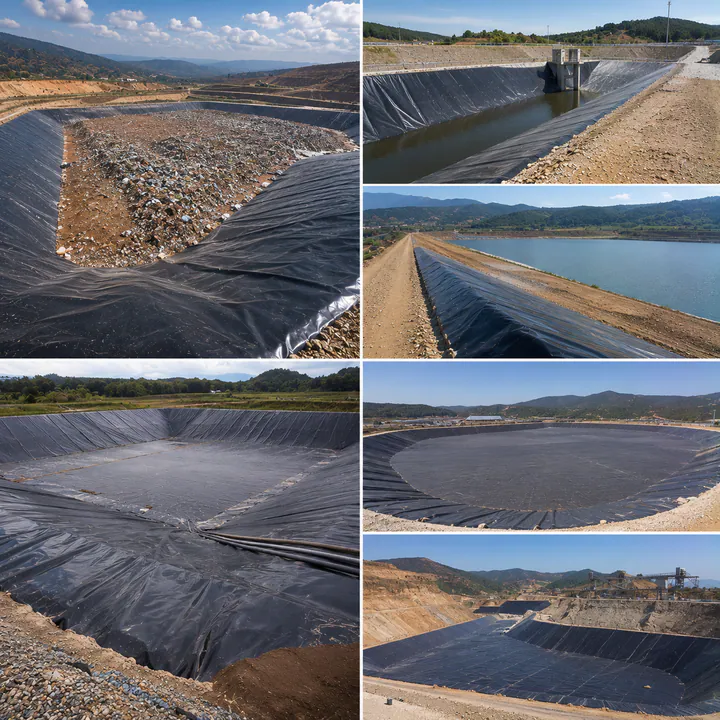
Select the geomembrane surface using project-specific interface shear data, groundwater conditions, cover loads and anchorage design. Texture can increase interface resistance, while stability also depends on the adjacent materials and the complete slope system. The slope bands below support early procurement discussions. Have the designer approve the actual upper and lower interfaces and both construction and service conditions.
Selection Guides
Risks and controls
- Uncontrolled groundwaterCheck pore-pressure relief and potential sliding within the soil.
- Inconsistent thickness definitionsUse the adopted method for nominal thickness, core thickness and asperity height.
- Incomplete restraint planningInclude anchors, temporary ballast and staged cover placement.
Selection Guides
Implementation steps
- Provide the sectionState slope height, length, ratio, benches and anchor dimensions.
- Identify the interfacesList upper and lower materials and moisture conditions.
- Test representative materialsUse proposed liner and site materials for interface shear assessment.
- Approve the roll scheduleConfirm thickness basis, texture, roll width and deployment direction.