
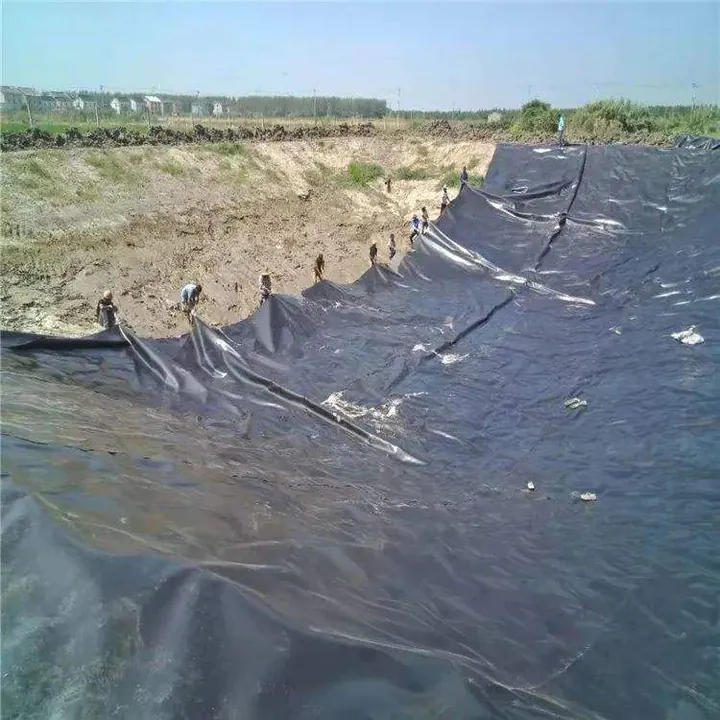
Construction lessons
Common risks and addressing them
- Directly after rainThe water content changes and the brakes lead to later sinking.
- Only remove the surface stoneThe stone is still likely to break the membrane after being loaded.
Construction lessons
Steps to landing
- The split table
Cutting plants and excavating root and rot colony.
- The pressure level
The crater is filled with fine materials and construction waste is prohibited.
- Protective layer
The use of clay or sand as a means of transportation is not restricted to the use of clay or sand.
Construction lessons
Customer pain points and project conclusions
The leakage of fish often originates from the substrate before the padding, rather than the film itself. The qualifying substrate should be stable, continuous, free of sharp objects and mutations; the tree roots need to be cleaned and treated for regeneration risk, the weak areas need to be replaced with filling, groundwater or gas.
Construction lessons
Procurement and Acceptance Checklists
| The checkpoint | Control requirements | Delivery of evidence |
|---|---|---|
| The balance | No pointed stones, roots, hard blocks and mutations | All steps checked |
| The pressure and sinking | Soil change, footsteps stable | Pressure/loading records |
| Underground water and gas | Imported and exported pipes maintained | Hidden Acceptance |