
Selection guides
Procurement and Acceptance Checklists
| The checkpoint | Control requirements | Delivery of evidence |
|---|---|---|
| Key functions | Water conductivity/filtration/soil/cleaning clear | The map |
| Water supply capacity | Testing under pressure, hydraulic gradients and contact conditions | Watershed report |
| Filtering layer | Single-sided/both-sided configuration and perforation, penetration matching of the site soil | Soil-level distribution and reporting |
Selection guides
Customer pain points and project conclusions
Three types of materials cannot be replaced by appearance: geonets are mainly used for support, drainage or integration with vegetation; three-dimensional geomats are oriented towards surface solids and vegetation root muscles; composite drainage networks provide flat drainage through a core network and can be designed on one or two sides of composite geotextiles. Projects should compare design methods to conductive water performance under pressure, hydraulic gradient, contact surface and expected use conditions, rather than replace drainage with empty load thickness.
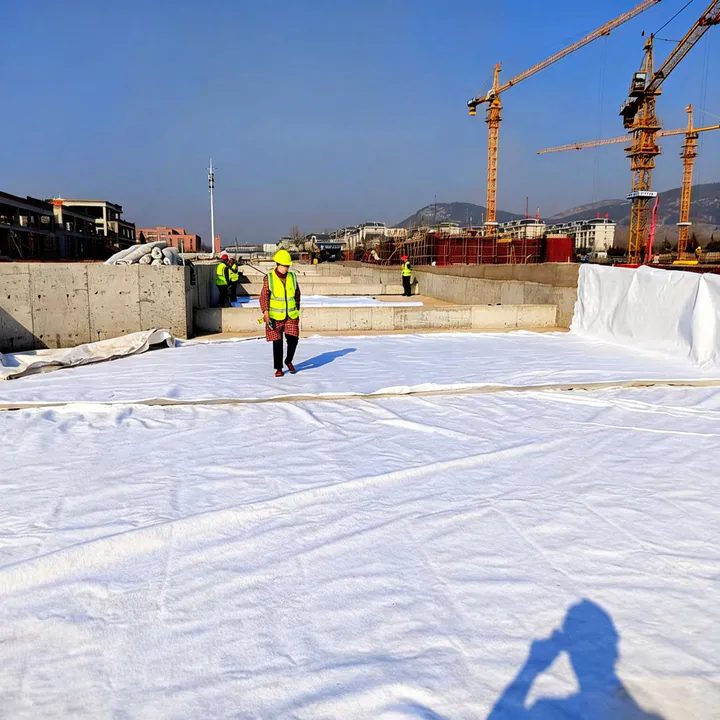
Selection guides
Steps to landing
- Drawing the drainage pathThe water level, flow, export and containment measures are marked.
- Check the soil pressureThe test conditions for the actual soil and construction load are selected.
- The following is a list of some of the most common types ofCheck the continuity of connection, consolidation and drainage.
Selection guides
Common risks and addressing them
- The density of the water is replaced by the water contentThe capacity of the core material after compression may decrease significantly.
- Exports unprotectedThe water level is not affected by the water pressure.